Seven years ago, we set out to make a film about women who weren’t allowed to dance — and their journey from suppression to expression, told through garba. It was called Hellaro.
This is the story of how that film was made, what almost stopped it, and the night it changed what people believed a Gujarati film could be.
“Too local. Too small. Too Gujarati.”
When we began, those were the words we heard most often. A period film, set in a remote village in the Rann of Kutch. An ensemble of thirteen women. Folk music at its heart, in a dialect of Gujarati. No stars in the conventional sense. Every rule of “what works” said no.
But the story would not let go. There was something in it that felt bigger than its setting — the idea that expression is not a luxury; it is a need. That a dance could be an act of courage. Anyone, anywhere, could understand that. The language was Gujarati; the feeling was universal.
Making it: salt, wind, and thirteen women
Director Abhishek Shah built the film with a patience that shaped everyone around it. We shot in the Rann — a landscape that gives you nothing to hide behind. The heat and the white salt flats became part of the film’s truth: this is what the women’s world felt like, vast and confining at once.
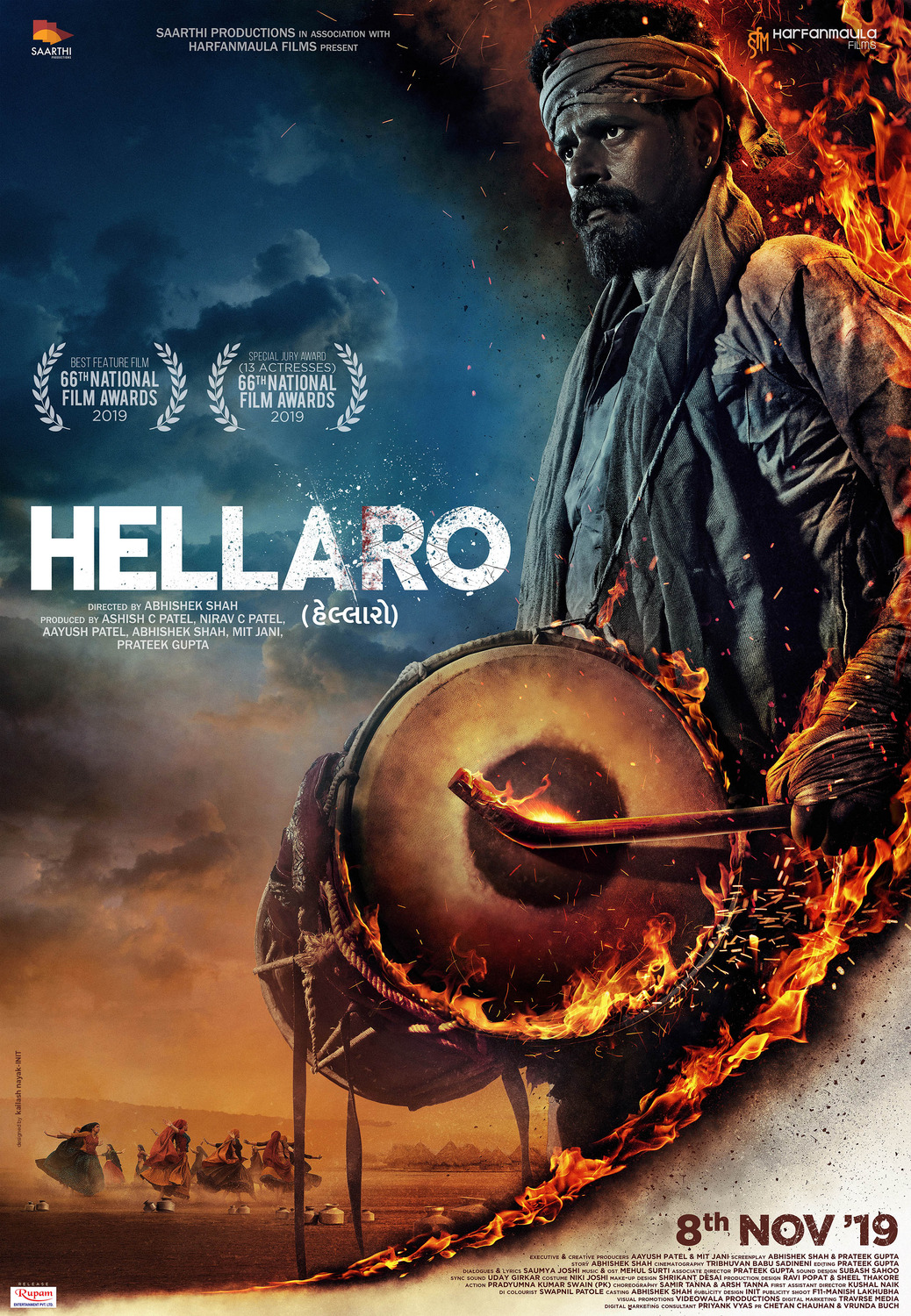
The heart of the film was its ensemble — thirteen actresses who carried it together, as one body. When the garba sequences finally came together — drum, dust, and defiance — everyone on set knew we were watching something rare. The 66th National Film Awards jury would later agree, honouring all thirteen of them together with a Special Jury Award.
The night in New Delhi
Then came the announcement none of us were prepared for: Hellaro had won the National Film Award for Best Feature Film — the first Gujarati film ever to receive India’s highest honour for cinema.
Standing at the ceremony in New Delhi, what I felt most was not triumph. It was vindication — not for us as individuals, but for an idea: that a story told in Gujarat, in its own voice, could command the nation’s attention. “Too Gujarati” had never been the problem. The world simply hadn’t been given enough chances to watch.

What Hellaro taught us
Three lessons stayed with me. First: cultural truth travels. The more honestly a story belongs to its soil, the further it can go. Second: craft is non-negotiable. Hellaro was not honoured for being Gujarati; it was honoured for being good. Third: talent was never our shortage. The writers, technicians, musicians, and actors were all here — what they needed was belief, and a body of work to stand on.
Our stories were never too Gujarati. The world simply hadn’t been given enough chances to watch them.
That third lesson eventually became Saarthi Studios — a home built in service of Gujarat’s storytellers, so the next Hellaro has an easier road than the first one did. Not because one film is enough, but because it proved the road exists.
Hellaro belongs to everyone who made it — its director, its writers, its thirteen extraordinary women, its crew, and its fellow producers. This retelling is simply one producer’s memory of a journey that changed what we believed was possible.